A single change in the human genome can cause disease, yet when scientists try to create a disease model in the lab, identifying and fixing that precise change can be surprisingly difficult. In essence, the human genome is like a book filled with three billion letters, and identifying a disease-causing variant is like finding a "typo" in that book. Therefore, the challenge for researchers is to isolate that single-letter change without disrupting or altering anything else, which can profoundly affect the viability and accuracy of the disease model.
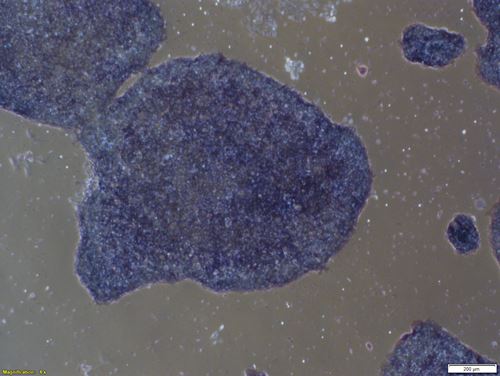
In 2014, researchers at the Gladstone Institute of Cardiovascular Disease, in Bruce Conklin's lab, developed a method to more efficiently isolate and fix these "typos" using induced pluripotent stem cells (iPSCs). iPSCs are derived from blood or skin and can be programmed into nearly any cell type in the human body, making them an attractive target for precision medicine and disease modeling. Published inNature Methods, the study describes a novel way to create two versions of the same iPSC line that differ by only a single-base variation [1]. Overall, this method gave researchers a more direct and efficient way to both engineer precise mutations and isolate the unique cells carrying them- any difference between the lines could be attributed to that single change.
While this foundational work by the Conklin lab addressed finding rare "typos" in the genome, the group later sought to understand why successful edits were so rare and whether they could be made more common. Looking toward a more streamlined approach to disease modeling, in 2016, the Conklin lab leveraged their original methodology to build a new approach that could track how cells repair DNA after it is edited- either carefully, by copying the intended correction, or quickly, by patching the break in a way that can leave errors behind. The test was also sensitive enough to detect a single edit among a thousand copies of the genome, like finding one "typo" in a thousand copies of the book, or, in scientific terms, a thousand copies of the human genome [2]. The results showed that the odds of a clean edit depend on the gene of interest, the tool, and the cell type, confirming that researchers need to test conditions for each model rather than assume them.
Taken together, these landmark studies by the Conklin lab addressed two common issues in disease modeling research. First, their 2014 work created a method to identify cells that contain an edit of interest with greater precision. In 2016, they built on that approach and gave researchers a tool to measure and compare editing conditions, allowing them to choose conditions that favor more precise edits in targeted cell models. This work by Bruce Conklin and his lab ultimately supports a workflow that yields more correctly edited cells from the start, with a method for isolating these edited cells more efficiently.
The Conklin lab named the iPSC line from these studies "WTC-11," and it is currently housed in the NIGMS Human Genetic Cell Repository at Coriell as GM25256. Since the publication of this work, research groups worldwide have used this line as a normal control, and it has become the foundation for the Allen Institute for Cell Science's collection of fluorescently tagged stem cell lines. The history of GM25256 illustrates how a well-characterized cell line and a method developed to identify one rare genetic event can provide a foundation for increasingly sophisticated approaches to studying cell biology and human disease.
1.Miyaoka Y, Chan AH, Judge LM, et al.Isolation of single-base genome-edited human iPS cells without antibiotic selection.Nature Methods. 2014;11:291–293.
2.Miyaoka Y, Berman JR, Cooper SB, et al.Systematic quantification of HDR and NHEJ reveals effects of locus, nuclease, and cell type on genome-editing.Scientific Reports. 2016;6:23549.