Fully understanding how the brain forms memories, feelings and behaviors was a long-held dream for researchers. Scientists are able to identify which brain regions become active during a memory or a feeling, but proving that one specific type of nerve cell causes a behavior has remained a mystery. On October 5, the Nobel Assembly at Karolinska Institutet awarded the 2026 Nobel Prize in Physiology or Medicine to Karl Deisseroth, Peter Hegemann and Georg Nagel for helping unravel that mystery through a method known as optogenetics [1].
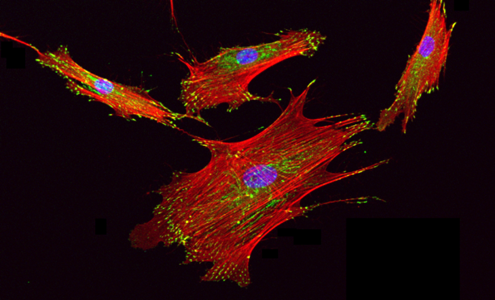
Optogenetics, a blend of "opto" (light) and "genetics," uses targeted genetic modifications to make neurons sensitive to light, so researchers can switch them on or off with a pulse of light. That has enabled the study of memories, emotions, and behaviors, and ultimately of the neurons involved in psychiatric and neurological disorders. The method began with Peter Hegemann and Georg Nagel's discovery that a light-sensing alga makes channels that can generate electrical signals, and Karl Deisseroth's group then used one of them to control nerve cells with light [2]. The technique has since been used in living animals to control behavior and memory and to reveal which specific nerve cells drive different brain functions.
Since then, researchers have used optogenetics to find neural circuits involved in pain, social behavior, reward and attention, and to learn more about conditions including depression, schizophrenia, Alzheimer's disease and Parkinson's disease [3]. Finding these circuits, however, is only part of the picture. To understand why these disorders develop, scientists also need genetic and cellular information from people who live with these conditions.
That is where biobanks come in. Coriell manages the NIGMS Human Genetic Cell Repository, which stores donated cell lines, including induced pluripotent stem cells (iPSCs), and shares them with researchers worldwide. iPSCs are made by reprogramming a donor's skin or blood cells into stem cells that can become almost any cell type, including neurons. In a 2017 study, researchers used optogenetics to switch on human neurons grown from one repository line, showing that the neurons kept maturing and developed robust electrical and synaptic activity over months [4]. Just as optogenetics gave neuroscientists a switch for individual nerve cells, resources like these supply the human context needed to interpret what those switches reveal.